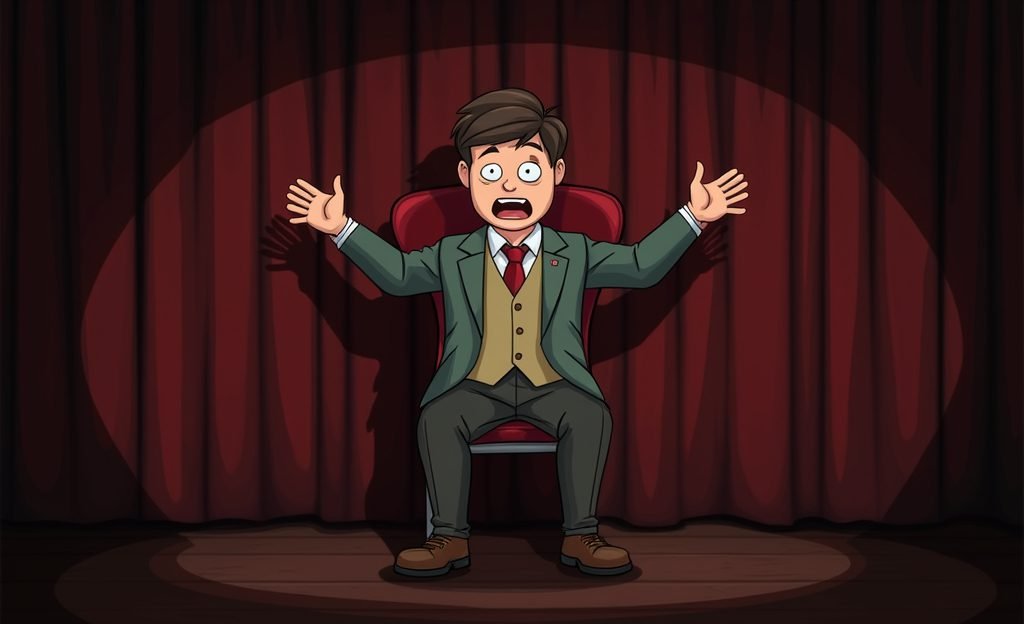
In 2012, there was an event where I stood frozen, staring at my audience for five straight minutes without uttering a word. I even forgot to greet them or say anything introductory. It was as if my whole body froze, my brain lagged, and I had just woken up with amnesia, unable to comprehend who those people were. Luckily, I regained my composure after five minutes. But for that particular event, the damage was done. People were looking at me, not with contempt, but with pity or sympathy, which felt harsher than contempt. Have you ever experienced something similar? Or have you seen your friends, relatives, or loved ones panic like this?
Like the famous quote I included in my “About” section:
“The human brain is a miracle—it works 24/7, even while you sleep… until someone hands you a microphone.”
Stage fright is a very common and natural occurrence, even among the best speakers, singers, politicians, etc. Even people like Adolf Hitler, a naturally charismatic speaker, once panicked during a speech. If we were to list notable figures who experienced stage fright, it would include almost everyone you aspire to emulate in public speaking. So, you get the point, right? You are not alone! Many have conquered stage fright before, and so can you.
What is Stage Fright and Why Does it Happen?
Before diving into solutions, we need to understand what stage fright is and why it happens. By nature, humans are wired with defensive mechanisms to protect themselves from danger. These mechanisms have allowed us to evolve into highly advanced beings capable of conquering incredible challenges. At the core of these defenses lies our brain.
Our brain controls every function in our body, including emotions and mood. Neurotransmitters and hormones play a significant role here. Neurotransmitters like GABA and serotonin contribute to anxiety, while hormones like adrenaline and cortisol cause stress. In stressful situations, these chemicals flood our system, triggering the brain’s “fight or flight” response.

For example, Taylor Swift once ran toward a fire exit before an event to escape the overwhelming fear. This happens because the brain tries to avoid discomfort. When we feel stressed and overthink, the nervous system generates excessive electrical activity, which can “short circuit” some brain functions (in layman’s terms). Memory, speech, and even sensory perception can temporarily shut down, leaving us panicked and vulnerable.
But fear not—we have solutions!
The Primary Causes of Stage Fright
We identified stress as the root cause of stage fright. But what causes stress? A little bit of stress is normal and even beneficial, but too much of it is counterproductive. Here are three primary causes:
- Unfamiliarity: Not knowing what to expect.
- Lack of Preparation: Feeling unprepared or not confident enough.
- Performance Anxiety: Overthinking and focusing excessively on the outcome.
Now let’s address these issues one by one:
1. Unfamiliar? Familiarize Yourself
Before your performance, try to familiarize yourself with the venue and audience. If possible, visit the location in advance. Walk around the stage, observe how people enter, and understand the setup. Imagine yourself standing in front of a room full of people.
If you can’t visit in person, watch videos or view photos of the space. Visualize yourself there. The goal is to reduce the brain’s tendency to trigger a fight-or-flight response due to unfamiliarity.
On the day of the event, mingle with the audience if possible. Get to know a few people, gauge their expectations, and break the “stranger” barrier. Once you’re on stage, take a moment during the introduction to adjust. Ask the audience questions or share a light comment to ease the tension.
Congratulations—you’ve completed level one!

2. Preparation = Confidence
The better prepared and knowledgeable you are, the more confident you will feel. Once you have a clear idea of what to say and how to structure your speech, practice enough to build momentum. Confidence will follow naturally.
If you’re not fully confident, act the part. Pretend to be the most confident person in the room. For long speeches, keep water handy and ensure your comfort. Start with pre-determined or memorized opening phrases. A strong start sets the tone and boosts your confidence.
Over time, as you handle more events and speeches, you’ll no longer need these crutches. Level two complete!

3. Performance Consciousness: A Wrong Approach
“What if I say something wrong?”
“What if someone interrupts me?”
“What if they laugh at me?”
Stop. These “what-ifs” are your enemies.
On stage, you are the expert. What you say becomes the new truth in that moment. No one is there to undermine you, and even if they are, that’s their loss—not yours.
Adopt the right mindset: You are there to give, not to get. Never depend on the audience’s reactions for validation. Instead, focus on sharing information, entertaining, or motivating them. Once you internalize this, you’ll feel confident, calm, and in control.
Level three complete!

Summary
Stage fright is caused by a rush of adrenaline and neurotransmitters creating temporary chaos in your system. You can overcome this by taking these steps:
- Before the Speech: Familiarize yourself with the stage and audience.
- During the Speech: Prepare well, and use memorized phrases for a smooth start.
- Mindset: Be a giver, not a taker.
Now you’ve completed the tutorial. You’re ready to conquer the stage like a pro!



0 Comments